Advanced Orthodontic Treatment
Correct crooked teeth, bite issues, and spacing problems with modern orthodontic solutions including braces and clear aligners for all age groups.
View Procedure
Save infected or damaged teeth with painless root canal treatment designed to eliminate pain, remove infection, and restore natural tooth function.
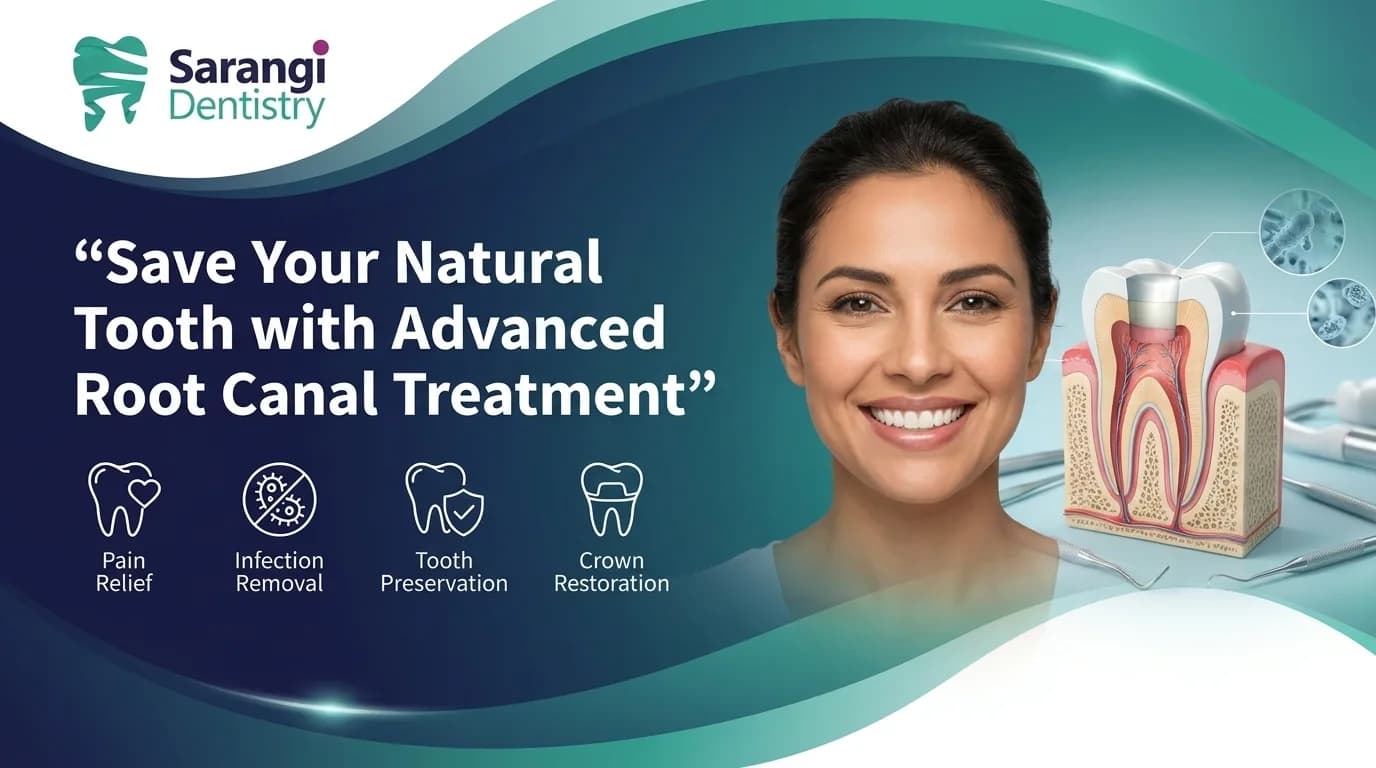
Root Canal Treatment (RCT) is an advanced dental procedure used to save severely decayed, infected, or damaged teeth while relieving pain and restoring oral health. At Sarangi Dentistry, we provide modern painless root canal treatment using advanced diagnostic technology, precision instruments, and patient-friendly care to preserve your natural teeth whenever possible. When the inner pulp of a tooth becomes infected due to deep decay, cracks, trauma, or repeated dental procedures, root canal treatment removes the infected tissue, disinfects the canals, and seals the tooth to prevent further infection. Our treatment focuses on comfort, precision, and long-term protection, helping patients regain healthy chewing function and confidence without tooth extraction.
Root canal treatment is a restorative dental procedure that removes infected or inflamed pulp tissue from inside the tooth. The inner canals are then carefully cleaned, disinfected, shaped, and sealed to protect the tooth from future infection.
This procedure allows patients to preserve their natural tooth structure instead of removing the tooth entirely. Modern root canal treatments are safe, effective, and far more comfortable than most people expect.
You may require root canal therapy if you experience:
Severe tooth pain while chewing or biting
Sensitivity to hot or cold foods and drinks
Swollen or tender gums
Tooth discoloration or darkening
Persistent toothache
Pus or abscess formation near the gums
Cracked or damaged teeth
Deep cavities reaching the tooth pulp
RCT removes infected pulp tissue and eliminates the source of severe tooth pain and discomfort.
Instead of extraction, root canal treatment preserves your original tooth structure and bite alignment.
Cleaning and sealing the canals helps stop bacteria from spreading to surrounding tissues and bone.
After restoration with a filling or crown, the treated tooth functions normally for chewing and speaking.
Saving the natural tooth helps maintain jawbone support and prevents shifting of neighboring teeth.
Deep tooth decay
Cracked or fractured teeth
Trauma or injury
Untreated cavities
Repeated dental procedures on the same tooth
Severe gum infection
We perform a detailed examination using digital X-rays and clinical evaluation to assess the extent of infection and tooth damage.
The affected area is numbed using local anesthesia to ensure a painless and comfortable treatment experience.
Specialized instruments are used to remove infected pulp tissue and carefully clean and shape the root canals.
The canals are disinfected and sealed using biocompatible filling materials such as gutta-percha to prevent reinfection.
A durable filling or dental crown is placed to strengthen and protect the treated tooth.
Modern root canal treatment is generally painless due to advanced anesthesia and modern dental techniques. Most patients feel relief from pain after the infected tissue is removed. Mild soreness after treatment is temporary and manageable with medication if needed.
Advanced painless RCT techniques
Experienced endodontic care
Digital diagnostics and precision treatment
Comfortable and hygienic clinical environment
Customized restorative solutions
Focus on saving natural teeth whenever possible
Long-term follow-up and patient support
The duration depends on the severity of infection and the complexity of the tooth. Some treatments may be completed in a single sitting, while others may require multiple visits for proper cleaning and healing.
After treatment, patients should:
Avoid chewing hard foods on the treated tooth temporarily
Maintain proper brushing and flossing habits
Attend follow-up appointments
Get a dental crown if recommended
Avoid delaying restoration after RCT
Proper aftercare significantly improves long-term treatment success.
Our dentist evaluates the infected tooth using digital scans and diagnostic imaging.
The tooth is numbed, and a small access opening is created to reach the infected pulp tissue.
The infected pulp is removed, and the root canals are carefully cleaned and shaped.
The disinfected canals are sealed with biocompatible filling material to prevent reinfection.
A protective crown or filling is placed to restore tooth strength, function, and appearance.
Here are the most common questions patients ask before deciding on treatment.
Yes. Root canal treatment is a safe and highly successful dental procedure used worldwide to save infected teeth and restore oral health.
Schedule a consultation with Sarangi Dentistry and receive thoughtful guidance, expert treatment planning, and personalized dental care.